Crown lifting in Mitcham
If you are looking for crown lifting in Mitcham, you are likely trying to solve a very practical problem: branches are blocking light, touching buildings, hanging over a path, or making a tree feel too low for the space it stands in. Crown lifting is one of the most useful tree surgery services for both homes and businesses because it improves clearance without removing the tree itself. For many properties in Mitcham, that balance matters. You may want a brighter garden, easier access along a driveway, more room above a pavement, or safer clearance near a shopfront, car park, or rear service area.
Mitcham has a mix of older residential streets, newer developments, estates, commercial premises, and small business yards, which means trees often need careful, site-specific work rather than a one-size-fits-all approach. A well-done crown lift can make a big difference to how a space feels and functions. It can help open up a garden, improve visibility, reduce interference with pedestrians or vehicles, and make maintenance easier. Done badly, though, it can leave a tree looking lopsided, stressed, or exposed. That is why local knowledge, good judgement, and the right method all matter.
Whether you are a homeowner near a narrow road, a landlord managing a shared boundary, or a business owner needing practical tree clearance, this page explains what the service involves, what to expect, and why using a local team for crown lifting in Mitcham is often the most sensible choice. If you are ready to make an enquiry, contact us today or request a free quote based on your site and tree type.
What crown lifting means and why it is carried out

Crown lifting is the selective removal of lower branches from a tree to increase the height of the canopy above ground level. In simple terms, it raises the “skirt” of the tree. This can be done for many reasons: to create space for walking underneath, to improve light into a garden or building, to reduce obstruction for cars and vans, or to make shared areas safer and more usable.
It is important to understand that crown lifting is not the same as chopping a tree back. A good tree surgeon removes only the lower limbs that are suitable for removal, leaving the canopy healthy, balanced, and in proportion with the species and the site. The aim is to improve clearance while keeping the tree’s natural shape and long-term health in mind. In many cases, the work is combined with light crown thinning or targeted pruning if that helps the tree respond well.
In Mitcham, crown lifting is often requested for front gardens where branches dip too low over paths, for rear gardens where trees block sunlight into houses, or for commercial sites where low limbs restrict access for delivery vehicles and customers. It is also useful around schools, care facilities, car parks, and communal estates where safety and day-to-day movement matter.
Common reasons Mitcham customers ask for crown lifting

People usually search for crown lifting because something about the tree has started to interfere with everyday use of the property. Sometimes the tree itself is healthy, but the lower branches are simply too low for the space. Other times the issue is seasonal, such as heavy foliage making a small garden feel enclosed in summer, or branches creating shadows across a conservatory or extension.
In and around Mitcham, the most common reasons include:
- Improving light into homes, gardens, and ground-floor rooms
- Creating safe headroom over paths, steps, and driveways
- Keeping branches clear of fences, sheds, roofs, and walls
- Allowing easier access for bins, bicycles, pushchairs, and vehicles
- Reducing the feeling of enclosure in smaller plots
- Helping commercial premises remain tidy and accessible
- Preventing low limbs from interfering with maintenance access
For many local customers, the service is not just about appearance. It is about making a property more workable. If you have a tree close to a boundary, over a shared route, or in a tight side return, raising the crown can make a remarkable difference without removing the tree altogether.
Why crown lifting needs a careful, local approach
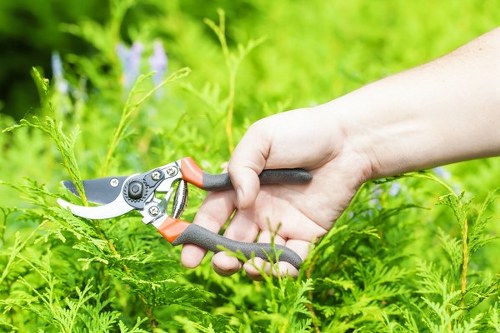
Mitcham includes a wide variety of tree settings, from compact front gardens and terraced homes to larger plots, communal landscaped areas, and business properties with restricted access. That means crown lifting has to be adapted to the tree, the ground conditions, the surrounding structures, and the way the space is used. A local team is more likely to understand the everyday issues that affect the work, such as parking restrictions, shared access routes, and the need to keep disruption to neighbours as low as possible.
Some trees can tolerate lifting well; others need more restraint. Species with a naturally spreading canopy may look balanced after a lift, while trees with a narrower form may need more selective work to preserve their shape. The condition of the tree also matters. If it has weak unions, previous pruning cuts, or signs of stress, the work should be planned carefully. A responsible approach avoids removing too much foliage at once and keeps enough growth in place for the tree to continue functioning properly.
Good crown lifting is measured, not extreme. The purpose is to raise clearance, improve use of the space, and maintain the tree’s character. That is why a proper assessment comes first. It is also why it is worth choosing someone familiar with the local area and the practical realities of working in tight residential streets, shared driveways, and busy commercial yards.
What the service includes
A professional crown lifting service in Mitcham usually begins with an inspection of the tree and its surroundings. The tree surgeon will look at the species, size, health, branch structure, proximity to buildings, and the amount of clearance you want to create. From there, the work is planned to suit the tree and your property rather than applying a rough standard height across every case.
Typical work may include:
- Removing selected lower branches to raise the canopy
- Pruning back secondary growth where needed for clean clearance
- Maintaining the tree’s overall shape and natural balance
- Taking account of nearby structures, wires, fences, and access routes
- Clearing away cut material at the end of the job
- Leaving the site tidy and usable once the work is complete
In some cases, the work may also involve a small amount of crown thinning or formative pruning if that helps the tree remain balanced after the lower limbs are removed. The exact method should always depend on the tree and the site. A careful approach is especially important where the tree is part of a boundary line, stands close to a pavement, or contributes to shade in a garden that needs brighter conditions.
What a careful tree surgeon will check before starting
Before making any cuts, a sensible contractor will consider the following:
- Which branches can be removed without harming the tree’s structure
- How much clearance is genuinely needed for the site
- Whether the crown lift should be gradual rather than dramatic
- Any potential impact on privacy, screening, or wind exposure
- How to work safely around parked cars, paths, walls, and outbuildings
Benefits for homes, landlords, and local businesses

Crown lifting offers a practical set of benefits, which is why it is often requested by a wide range of customers. For homeowners, one of the biggest advantages is improved light. Trees can make a garden feel cooler and more secluded, which is sometimes desirable, but too much shade can limit planting, make patios less inviting, and reduce the amount of daylight reaching the house. Raising the lower canopy can create a better balance.
Another major benefit is access. In older streets or properties with narrow approaches, low branches can make a simple walk to the front door awkward, especially for pushchairs, mobility aids, or carrying shopping. A crown lift can improve headroom and make the property easier to use every day. For landlords and managing agents, this can also help reduce complaints about blocked paths or unsafe overhanging growth.
For commercial customers, clear access is often the priority. If a tree is partly blocking a forecourt, loading area, car park entrance, or delivery route, a crown lift may help the site function more smoothly. It can also improve visibility for customers arriving on foot or by car. In some settings, a tidier raised canopy gives a more professional appearance without removing the tree from the landscape.
Typical advantages at a glance
- Better light into homes and outdoor spaces
- Safer clearance for movement beneath the tree
- Improved access for maintenance and day-to-day use
- A more open and balanced appearance
- Reduced conflict between branches and buildings
- Better practicality for commercial and shared spaces
In short, crown lifting can make a property easier to live with. It may seem like a simple adjustment, but when done properly it can improve comfort, safety, and usability in a way that owners notice immediately.
How crown lifting works on different property types in Mitcham
Because Mitcham has such varied property layouts, the same tree work can look very different from one site to another. On a residential street, the main concern might be lifting branches above a garden path or driveway without making the tree feel bare from the ground. In a rear garden, the aim may be to let more daylight reach a kitchen extension or patio. On a corner plot, visibility and street-side clearance may matter more than shade.
Commercial and shared sites often have different priorities. A retail unit may want an open forecourt and clear sightlines. A nursery, school, or community building may want safer movement under the canopy. A landlord or housing manager may need to improve the shared access route while keeping the green character of the site intact. The right crown lift respects those practical needs while staying sensitive to the surrounding environment.
Parking and access can also shape the job. Some Mitcham properties have limited off-street parking, narrow entrances, or shared driveways that make the work logistically tricky. A local team will normally plan the job with these constraints in mind, choosing a safe and efficient approach for setting up equipment, protecting surfaces, and minimising disruption to neighbours and passers-by.
Areas and settings where access can be more challenging
- Terraced streets and narrow frontages
- Homes with side access only
- Shared driveways and communal parking spaces
- Commercial yards with tight turning space
- Properties close to boundary fences or walls
- Sites where pedestrian access must stay clear
What makes a good crown lift look natural
One of the most common concerns customers have is whether the tree will still look good afterwards. That is a fair question. A poor crown lift can leave a tree looking top-heavy or stripped from below. A well-executed one keeps the canopy in proportion and makes the trunk and branching structure look intentional rather than hacked about.
The key is to remove only what is necessary and to choose the right points on the tree. Cuts should be made cleanly and in the correct place, with the overall design of the tree in mind. For mature trees, a moderate lift may be all that is needed to make a site work better. For younger trees, the work may be lighter still, allowing the canopy to develop in a suitable shape over time.
Natural-looking results come from restraint, skill, and experience. The best outcome is often one that most people notice only because the property feels more open and usable, not because the tree itself looks heavily altered. That is especially important in front gardens and visible roadside settings where appearance matters as much as clearance.
Signs of good workmanship
- The tree still looks balanced from all angles
- Lower branches are raised, not indiscriminately removed
- The crown still provides a healthy amount of foliage
- Nearby features are protected during the work
- The site is left clean and manageable afterwards
How to prepare for the visit
Getting ready for crown lifting is usually straightforward, but a little preparation helps the job go smoothly. If you are arranging work at a home, think about access points, parked vehicles, pets, and anything that might be in the way of the team on the day. If the tree is near a shared boundary, it can also be sensible to let neighbours know what is planned so they are aware of temporary noise or access changes.
For commercial sites, it helps to identify the best time for the work so disruption is kept to a minimum. Some businesses prefer early starts or quieter periods, while others need the work coordinated around deliveries or customer access. A good local contractor will discuss these practical details before starting and plan the visit in a way that suits the site.
Here is a simple preparation checklist:
- Clear access to the area around the tree where possible
- Move vehicles, bins, garden furniture, or fragile items
- Keep pets and children away from the work area on the day
- Tell neighbours if branches are close to shared boundaries
- Highlight any concerns about cables, sheds, fences, or surfaces
- Confirm whether there are any special access instructions
What affects the cost of crown lifting?
Customers often want to know what influences pricing before they book. While exact figures depend on the tree and site, several common factors usually shape the quote. Tree size is one of the biggest considerations, because larger trees generally take longer to work on and may need more equipment or more careful sectional pruning. The number of branches to be removed and the tree’s overall condition also matter.
Access is another important factor. A tree in an open back garden is usually simpler to work on than one in a tight alley, behind a house with no side access, or near a busy commercial frontage. Waste removal can also affect the job, particularly if large volumes of cut branches need to be carried through the property or loaded out from a restricted area. If the site has limited parking or awkward entry points, extra planning may be needed.
Other factors may include whether the tree is part of a larger maintenance plan, whether multiple trees are being lifted at once, and whether additional pruning or deadwood removal is advisable. A proper quote should reflect the actual work involved. That is why it is best to request an assessment rather than guessing from a photograph alone, especially for mature trees or complex sites.
Typical pricing influences
- Tree height and spread
- Amount of branch removal required
- Access and parking conditions
- Location of the tree relative to buildings and boundaries
- Whether waste needs to be removed from a difficult site
- Any extra tree care needed at the same time
Why choose a local company for Mitcham tree work?
Using a local company for crown lifting in Mitcham offers several practical advantages. A local team is more likely to understand the layout of nearby streets, the kinds of access problems common in the area, and the expectations of different property owners. That local familiarity can save time, reduce disruption, and lead to better planning from the outset.
It also helps when you need a responsive service. Tree issues can become urgent if branches are blocking access, creating low headroom, or interfering with day-to-day use. A nearby team is often better placed to arrange an inspection, discuss the work clearly, and schedule the job at a time that fits your situation. For repeat customers, such as landlords, facilities managers, and businesses, a local relationship can make ongoing tree care much easier to manage.
Local expertise matters because trees do not grow in isolation. They sit within real properties, real boundaries, and real routines. A contractor familiar with Mitcham is better positioned to think about the practical details that affect the result: traffic flow, access limitations, neighbour concerns, and the character of the surrounding area.
Nearby areas and places we commonly cover
Customers asking about crown lifting in Mitcham often live or work in nearby parts of the wider area too. Depending on the site and the job, service coverage may extend to surrounding neighbourhoods and local districts where similar property types and access issues are common.
Areas often associated with this kind of work include:
- Mitcham town centre and surrounding residential streets
- Mitcham Common area
- Colliers Wood
- Tooting
- Pollards Hill
- Ravensbury
- Streatham borders
- Wimbledon borders
If your property is just outside these places, it is still worth asking. Many jobs are straightforward to discuss once the tree, access, and clearance requirements are known.
Frequently asked questions
Will crown lifting damage my tree?
Not if it is done correctly and the amount removed is appropriate for the species and condition of the tree. The work should be selective and planned, not excessive. A good result supports the tree’s long-term health while improving space underneath it.
How much of the lower canopy should be removed?
That depends on what the tree is doing now and what clearance you actually need. Some trees only need a modest lift to improve access, while others may need a more noticeable raise. The right amount should be based on the site rather than an arbitrary height.
Can crown lifting improve light in my garden?
Yes, often it can. Removing lower limbs may let more daylight into lawns, patios, windows, and planting areas. It will not change shade from the whole tree, but it can open up the space considerably.
Is crown lifting suitable for all trees?
Most trees can be lifted to some degree, but the exact method should vary. Young trees, mature trees, and trees with unusual forms need different treatment. In some cases, a lighter approach or an alternative pruning method may be more suitable.
Do I need to do anything before the team arrives?
Usually only simple preparation is needed: clear access, move vehicles or garden items, and make sure pets are kept safely away. If access is restricted or there are shared boundaries, mention those details in advance so the job can be planned properly.
Can you work around tight access and parking issues?
Yes, in many cases. Tight access is common in Mitcham, especially on smaller streets and shared sites. A local team should be used to planning work in constrained spaces and protecting nearby surfaces and structures.
Book crown lifting in Mitcham with confidence
If your tree is blocking light, limiting access, or simply feeling too low for the way you use your property, crown lifting may be the right solution. It is a practical, effective service for homes, shared spaces, and business premises throughout Mitcham. The key is to do it in a way that suits the tree, the site, and the people who use the property every day.
Whether you need a single tree raised above a driveway, several trees adjusted around a boundary, or a commercial site made more accessible, a local team can assess the work and recommend a sensible approach. The aim is always to improve clearance while keeping the tree healthy and the result natural-looking.
Ready to make your property easier to use? Contact us today to discuss your tree, share a few details about the site, and request a free quote. If you are comparing options, ask what is included, how access will be managed, and how the finished work will be left. That way, you can choose a service that fits your needs and your property.
Book your service now if you want a clearer, safer, and more usable space without removing the tree entirely.