Crown reduction in Mitcham
If you are looking for crown reduction in Mitcham, you are probably dealing with a tree that has grown too large for its surroundings, is shading a garden more than you would like, or is beginning to interfere with roofs, fences, driveways, or overhead space. In a built-up area like Mitcham, trees often sit close to homes, shared boundaries, and commercial premises, so even a healthy tree can become awkward if it starts to dominate the space around it. Crown reduction is one of the most useful tree surgery services for bringing a tree back into proportion while helping it remain attractive, safe, and suitable for the property.
Local customers often ask for crown reduction when a tree is becoming difficult to manage in a front garden, when branches are too close to a building, or when a tree is causing too much shade in an outdoor living area. In some cases, the aim is simply to make the tree more manageable without removing it altogether. In others, it may be about reducing wind resistance, improving light, or helping the tree coexist better with nearby structures and planting. A well-planned reduction can make a noticeable difference to your property without stripping away the natural shape of the tree.
Because Mitcham includes a mix of residential streets, commercial yards, older plots, newer developments, and properties with limited side access, the service needs to be approached carefully and with local understanding. A good tree surgery team will assess the tree’s species, condition, previous pruning history, and location before recommending the right reduction. That means the work should be tailored, not rushed. If you are considering this service, it is worth choosing a local team that understands how to work safely and neatly in real-world settings around Mitcham, Crystal Palace, Streatham, Tooting, Wimbledon, Colliers Wood, and nearby areas.
What crown reduction involves

Crown reduction is the process of carefully reducing the overall height and spread of a tree’s crown by cutting back selected branches to suitable growth points. The aim is not to flatten the tree or leave it looking over-pruned. Instead, the work should reduce size while keeping the tree balanced, healthy, and as natural-looking as possible. When done properly, the tree retains a pleasant outline, with the cuts made in a way that encourages recovery and future growth.
This is different from a simple trim or a quick hack-back. A reduction should be planned around the tree’s structure. The arborist will usually remove or shorten branches in a way that preserves the tree’s form and avoids unnecessary stress. In some cases, the reduction may be fairly modest; in others, more substantial work may be needed to bring the crown into line with the available space. The key is proportion. A tree in a small suburban garden in Mitcham may need a different approach from one in a larger commercial boundary or an open frontage.
Customers also choose crown reduction when they want to protect important parts of the property. For example, a tree may be overshadowing a conservatory, brushing against a roof, or leaning into a neighbour’s side return. Rather than removing the tree entirely, reduction can often be the most sensible middle ground. It allows you to keep the benefits of mature trees - privacy, greenery, wildlife value, and kerb appeal - while reducing the drawbacks that come with excess size.
Why people in Mitcham request crown reduction
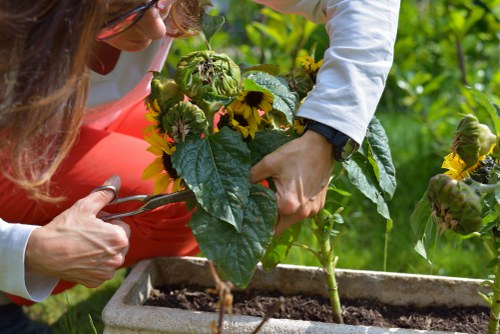
There are many practical reasons local homeowners and businesses look for tree crown reduction services in Mitcham. One of the most common is light. Mature trees can cast long shadows over gardens, patios, or office windows, particularly where neighbouring properties are close together. Reducing the crown can open up more daylight without removing the tree from the landscape. For many families, that makes the garden more usable and pleasant for outdoor time.
Another common reason is space. In Mitcham, many properties have modest front gardens, narrow access paths, or boundary lines that sit close to the street or a neighbour’s land. A tree that was planted years ago can begin to outgrow the available space. Crown reduction can help keep branches away from fences, rooflines, extensions, and outbuildings. It can also help reduce the likelihood of branches interfering with vehicles, pathways, or shopfront visibility.
Wind exposure is another factor. A large, dense crown can act like a sail in strong weather, placing extra strain on the tree and the surrounding area. While crown reduction is not a cure-all for every tree stability issue, reducing the canopy in the right way may help the tree perform better in exposed conditions. This is especially relevant for trees standing near car parks, commercial entrances, or open garden edges where gusts can funnel through.
What a professional service should include

A proper crown reduction service should begin with an assessment. The tree’s species, age, condition, previous pruning work, and surrounding constraints all matter. Some trees respond better to reduction than others, and a professional arborist should explain what can be achieved without harming the tree’s long-term health. This matters because not every tree should be reduced in the same way. A careful approach helps avoid poor regrowth, unnecessary stress, and an uneven appearance.
Customers in Mitcham should expect the work to include a tidy, methodical reduction carried out with suitable climbing, cutting, and safety equipment. A professional team will usually remove selected limbs, shorten ends back to appropriate points, and shape the crown so that the tree still looks natural. Debris should then be cleared away, leaving the site neat and usable. In many cases, the difference is immediately visible: the tree looks lighter, less dominant, and more in balance with the property.
It is also sensible to expect advice on follow-up care. Some trees may need ongoing monitoring, especially if they are older, have previously been topped, or are growing close to structures. A good local team should be able to explain whether the reduction is a one-off, whether future maintenance would be beneficial, and how to keep the tree in better shape over time. That level of advice is useful for anyone who wants the tree to remain an asset rather than a recurring problem.
Typical outcomes customers want
- More light into gardens, kitchens, or upper windows
- Less overhang over roofs, fences, and driveways
- A tidier, more balanced tree shape
- Improved clearance for footpaths and vehicles
- Reduced pressure on nearby structures
- A safer, more manageable tree in a compact space
Local knowledge matters in Mitcham
Choosing a local company for crown reduction in Mitcham can make a real difference to the experience. Mitcham has a wide range of property types, from older terraces and semis to newer developments, maisonettes, and mixed-use premises. Trees here can be tucked into awkward spaces, planted close to rear access lanes, or positioned at the edge of shared boundaries. A team that regularly works locally will be more prepared for narrow entrances, limited parking, and the need to keep disruption to a minimum.
Access is often one of the biggest practical challenges. Some properties may only allow equipment through a side gate or rear passage, while others have no driveway space at all. On busy streets or near commercial premises, parking and loading can take careful planning. A local tree surgery team should factor these details into the quote and method of work so the job runs smoothly. That is especially important where branches need to be lowered carefully, waste needs to be carried through tight access, or work needs to be completed without blocking neighbours.
Local familiarity also helps with communication. If a tree is close to a shared wall, boundary hedge, or neighbouring garden, there may be a need for extra care and sensible coordination. Likewise, some properties in Mitcham sit near schools, shops, small business units, and busy roads, which means timing and site safety matter. A local service is more likely to understand these realities and plan accordingly.
Why local experience is useful
Local experience can help with:
- Understanding tight residential access
- Managing work around parked vehicles and narrow streets
- Planning for shared boundaries and neighbouring properties
- Adapting to gardens with mature planting or limited turning space
- Reducing disruption for homes and businesses in the area
How crown reduction is carried out
The exact process will depend on the tree, but most jobs follow a sensible sequence. First comes an inspection. The arborist checks the crown, trunk, main scaffold branches, nearby structures, and any visible signs of stress or decay. From there, they decide how much to reduce the crown and which branches should be worked on. The target is usually to bring the tree down in size while keeping a strong framework and a pleasing shape.
During the work, cuts are made back to healthy growth points. A skilled tree surgeon will avoid leaving awkward stubs and will try to spread the reduction evenly so the crown remains stable and attractive. If the tree is close to a building, the team may use rigging or controlled lowering techniques to keep everything safe. In tight Mitcham gardens, that careful approach is particularly valuable because there is often limited room for large branches to be dropped freely.
Once the cutting is complete, all waste should be removed unless you have agreed otherwise. Many customers appreciate a clean finish because tree work can generate a surprising amount of material. The aim is to leave the property looking better than before: the tree reduced, the area tidied, and the remaining structure ready to recover. In many cases, the process also makes it easier for the homeowner to maintain the garden afterwards.
What a neat finish usually means
Good finish standards often include:
- Even reduction across the crown
- Minimal visual shock to the tree
- Safe handling of branches and debris
- Clear work areas after completion
- Respect for lawns, paving, and planting beds
When crown reduction is the right choice

Crown reduction is often chosen when a tree is healthy but simply too large for its surroundings. It may be the right option if branches are getting too close to a roof, if the canopy is overwhelming a smaller garden, or if you want to improve light without removing the tree. It can also be suitable when a tree needs to be made more compatible with its environment after years of growth. For many property owners, it offers a balanced solution between leaving the tree untouched and removing it entirely.
It is not always the answer, though. If a tree is badly diseased, structurally unsound, or suffering from severe decay, a different recommendation may be needed. Similarly, if the problem is only a few overlong branches, a lighter crown lift or selective pruning could be more appropriate. That is why an honest assessment is so important. The best outcome is one that suits the tree as well as the customer’s needs.
In a place like Mitcham, where mature trees may stand close to homes and commercial buildings, this balanced judgement matters. A tree that is too large can create ongoing inconvenience, but over-pruning can cause avoidable stress and an unattractive shape. The right reduction should improve the situation without creating a new problem. That is the standard customers should look for when comparing services.
Related services that may also help
- Crown thinning for improved light and airflow
- Crown lifting to raise clearance above paths or vehicles
- Deadwood removal for tidiness and safety
- Selective pruning for boundary and roofline issues
- Tree inspection before deciding on the best treatment
Preparing for your tree work appointment
Good preparation helps the job go smoothly and can save time on the day. If you are arranging a tree crown reduction in Mitcham, it helps to think through access, parking, and any nearby items that may need moving. You do not need to do everything yourself, but a little preparation can make the site safer and easier for the team to work in. This is especially true where gardens are narrow or shared access is involved.
Before the visit, it is useful to clear fragile items from the work area. Garden furniture, plant pots, ornaments, and vehicles may need to be moved if they are close to the tree. If you have pets, they should be kept secure and away from the work zone. In some cases, neighbours may also need a quick heads-up if the branches overhang their side or if access could briefly affect a shared path. Clear communication can prevent delays and make the process far less stressful.
It is also helpful to be clear about what you want to achieve. Are you mainly after more light, less height, less spread, or better clearance over a roof or path? The clearer your aim, the easier it is for the arborist to suggest the best approach. A local team should be able to explain realistic outcomes in plain language so you know what the tree will look like afterwards.
Simple preparation checklist
- Remove or secure items close to the tree
- Move vehicles if access may be needed
- Keep children and pets away from the work area
- Let neighbours know if branches cross boundaries
- Explain your main goal clearly when requesting a quote
What affects pricing for crown reduction
Prices for crown reduction vary depending on a number of practical factors. Tree size is one of the biggest influences: a small ornamental tree in a front garden will usually require less time and equipment than a large mature tree with a broad crown. Location matters too. A tree that is easily accessible from a driveway or open frontage is often simpler to work on than one tucked behind a property with narrow side access.
The type of tree also makes a difference. Some species are naturally dense or quick to regrow, which can affect how much planning is needed and how often maintenance might be useful. The condition of the tree matters as well. If the tree has deadwood, weak branch unions, previous poor pruning, or signs of stress, more careful work may be needed. In some cases, additional protection for surrounding structures or surfaces may also add to the complexity.
Waste removal and site conditions can affect the overall quotation too. If branches must be carried a long distance, lowered carefully over obstacles, or dealt with in a confined setting, more labour may be involved. That said, a reputable company should always be willing to explain the main cost factors clearly. If you are comparing quotes, look at what is included, not just the headline figure.
Common factors that influence the quote
- Tree height and canopy spread
- Access from the road or garden
- Whether special lowering techniques are needed
- Amount of waste to remove
- Condition and species of the tree
- Any nearby buildings, fences, or utilities
Residential and commercial crown reduction services
Tree work in Mitcham is not just for homeowners. Businesses, landlords, managing agents, schools, and community premises may also need crown reduction to keep their sites tidy, safe, and practical. A mature tree outside a shop, office, care setting, or car park can create the same kinds of issues as one in a garden: too much shade, reduced visibility, branches overhanging access areas, or pressure on nearby structures. In commercial settings, the added concern is often managing disruption while keeping the site operational.
For residential customers, the focus is often on light, privacy, and keeping the garden usable. For commercial customers, the priorities may include access, safety, and presenting a well-kept exterior. A good local team should be able to adapt to both. That might mean working early, planning around deliveries, or scheduling the work so it causes less inconvenience to residents, staff, or visitors.
Whatever the setting, the main objective is the same: reduce the crown in a controlled way that suits the location. Trees in busy mixed-use parts of Mitcham often need a practical approach, and the right team will take the time to understand the site before starting work. That is especially important where foot traffic, parked cars, and boundary lines are all in close proximity.
Who may benefit from this service?
- Homeowners with mature garden trees
- Landlords maintaining rental properties
- Managing agents responsible for shared land
- Shops and offices with street-facing trees
- Schools, community sites, and care premises
- Businesses with car parks or service yards
Areas covered around Mitcham
A local service based around Mitcham can often help in the surrounding neighbourhoods as well as the town itself. Customers commonly need work carried out in nearby parts of South London where gardens, boundaries, and access conditions can vary a lot from one street to the next. Whether you are close to Mitcham Common, near Colliers Wood, or further toward Wimbledon, Tooting, Streatham, Morden, or Norbury, the same careful approach applies: assess the tree properly, work safely, and leave the site tidy.
In these nearby areas, properties may range from compact terraces with narrow rear access to larger plots with established trees and more complex canopies. That variety is one reason a local team is so useful. They are more likely to have experience with the day-to-day challenges of working in and around suburban South London, including managing materials in tighter streets and dealing with gardens that have mature planting, sheds, extensions, or hard landscaping.
If your tree is shared between properties or sits close to a boundary, a local company can also help work around the practicalities more smoothly. Sometimes it is simply about timing and access; other times it is about making sure the right pruning approach is chosen from the start. Either way, local knowledge helps keep the whole job more straightforward for everyone involved.
Nearby areas often served
- Mitcham
- Colliers Wood
- Morden
- Wimbledon
- Tooting
- Streatham
- Norbury
- Other nearby South London locations
Frequently asked questions
Will crown reduction damage my tree? When carried out properly, crown reduction should be designed to suit the tree’s structure and health. A professional tree surgeon will reduce the crown in a way that avoids unnecessary stress and helps the tree retain a balanced form. The wrong approach, however, can cause poor regrowth or an uneven appearance, which is why experience matters.
How much can a tree be reduced? That depends on the tree species, condition, and the purpose of the work. There is no one-size-fits-all answer. A reputable arborist should advise on what is reasonable for the tree in question and avoid promising drastic reductions that may not be suitable for long-term health.
Do I need permission for crown reduction? Sometimes tree work may be subject to planning controls or tree preservation rules. If you are unsure, it is sensible to check before booking. A local team may be able to advise you on the practical next steps, but permission requirements depend on the specific tree and property.
How often will a reduced tree need attention again? It varies by species and growth rate. Some trees respond with fairly vigorous regrowth and may need periodic maintenance; others stay in shape for longer. The answer often depends on the tree’s age, location, and how much was taken off.
Can crown reduction improve safety? It can reduce the risk of branches overhanging structures or becoming awkward in windy weather, but safety always depends on the condition of the tree. If there are signs of disease, decay, or instability, an inspection is important before any work goes ahead.
Why choose a local company for the work
When you need crown reduction, choosing a local company can make the whole process easier from first enquiry to final tidy-up. Local teams are usually better placed to understand the character of Mitcham properties, the access issues common in nearby streets, and the practical steps needed to protect gardens, boundaries, and nearby buildings. That can lead to a more efficient and less disruptive service.
There is also value in choosing a team that can explain options clearly. You should feel comfortable asking how much reduction is suitable, whether the tree needs additional work, and what result to expect. A straightforward conversation at the start often leads to a better end result. Good tree surgery is not about removing as much as possible; it is about making the right cuts in the right places.
If you want to keep a mature tree but make it fit better in its surroundings, crown reduction is often the right place to start. It can improve light, maintain privacy, and help a tree remain part of the landscape without taking over the whole space. For customers in Mitcham who want a practical, tidy, and considerate service, the best next step is to request an assessment and discuss your aims.
Contact us today to discuss your tree, request a free quote, or book your service now. If you are unsure whether crown reduction is the best solution, an on-site assessment can help you make the right decision with confidence.